
Guides
Performance management: diagnosing five causes of a shortfall before you respond
A diagnostic guide to performance shortfalls: five causes, how to tell them apart, what the wrong response costs, and when to involve HR before formal steps.
When someone's work falls short, the response is usually chosen before the cause is known. That is the whole problem. The same shortfall can have five different causes, each needs a different response, and applying the wrong one makes things worse in a way that is hard to reverse.
Scope. This is a way of thinking about a diagnosis, not a procedure. Requirements covering discipline, dismissal, hiring, pay, records and fair process differ by jurisdiction and by employer. Anything with formal consequences goes to your HR function or your organization's employment advisers before you take a step, not after.
What to take away
- Diagnose before you respond. Encouragement, training, a process fix and a formal step are answers to different questions, and three of them are wrong at any given moment.
- Check that the expectation was actually stated before anything else. It is the most common cause and the cheapest to fix.
- Check whether you are the obstacle before concluding that the person is unwilling. Held decisions and shifting priorities produce behavior that looks exactly like reluctance.
Why this belongs with negotiation and influence
Every row in the table changes what you are asking for and from whom. Unclear expectations are a communication problem you influence by stating them plainly. A blocked process may require negotiating access with another team.
A priority conflict is a negotiation about sequence, decision rights, and whose request wins. Even the fifth row is an influence question: whether a direct request changes behavior. The diagnosis tells you which lever to use.
Without it, you negotiate the wrong issue, often with the wrong person, and your influence drops. Leaders who name the real cause early preserve trust and make the next conversation about the work, not about character.
First, establish that the expectation exists
Do this before any other diagnosis, every time, including when you are certain it is not the problem.
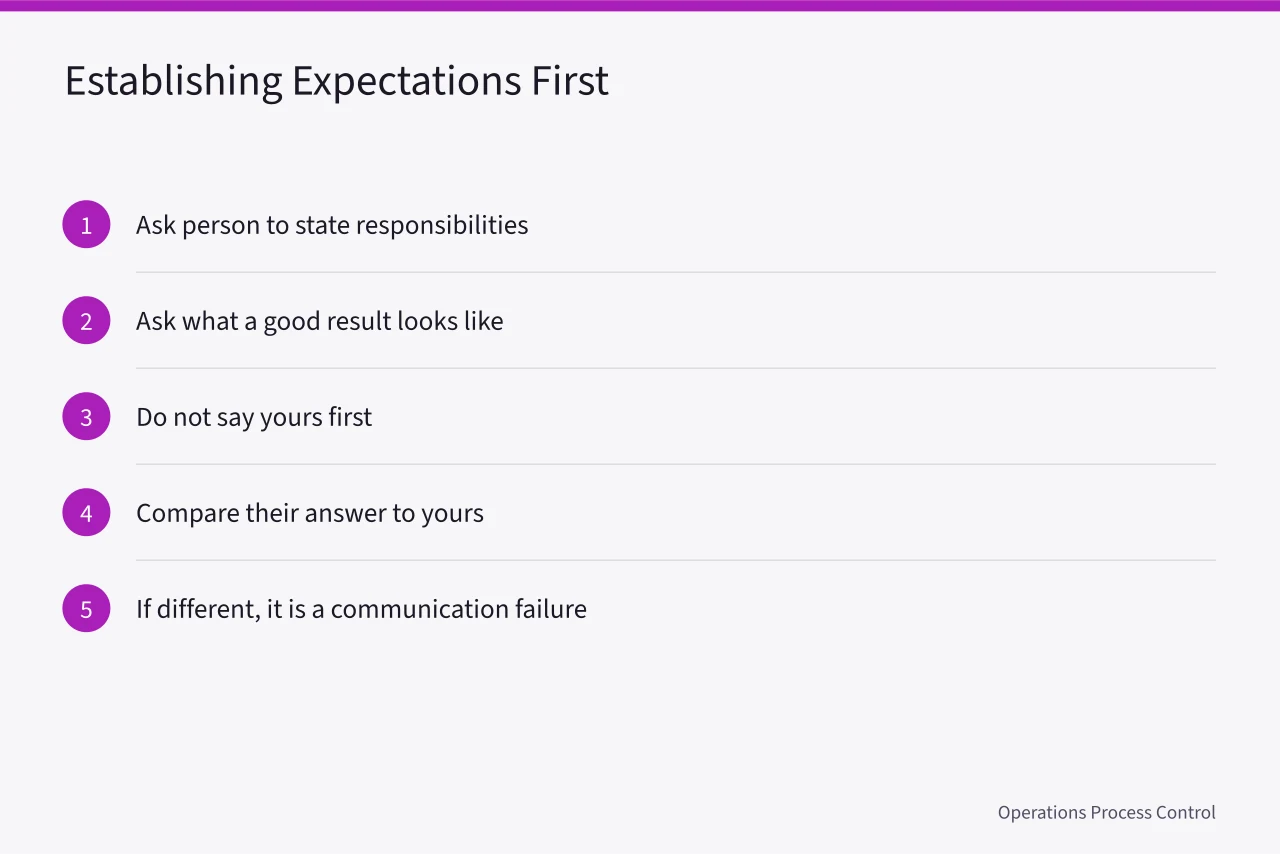
Ask the person to state, in their own words, what they are responsible for and what a good result looks like. Do not say yours first. If the answer differs from what is in your head, you do not yet have a performance question; you have a communication failure with a delay attached, and it is yours.
It sounds too simple to be the answer as often as it is. Skipping it wastes weeks. The related habit of writing expectations down at the start of a period, and revisiting them when the work changes, is covered in performance management.
Five causes, and what separates them
What you would see
- The expectation was never stated
- Their description of the job differs from yours
- They cannot yet do it
- It has never gone well, and they cannot describe what good would look like
- Something is in the way
- It goes well sometimes and not others, and others hit the same wall
- Their priorities conflict
- The work is late, other work is not
- They are unwilling
- Capable, unblocked, clear, and still not changing after a direct request
The question that tests it
- The expectation was never stated
- "What do you think good looks like here?"
- They cannot yet do it
- "Have you done this before, and how did it go?"
- Something is in the way
- "What did you try, and what stopped it?"
- Their priorities conflict
- "Who else is asking you for things, and what did you tell them?"
- They are unwilling
- Rule the other four out first
The response
- The expectation was never stated
- State it, in writing, and start from now
- They cannot yet do it
- Instruction, a worked example, a smaller first version, time with someone who can
- Something is in the way
- Remove the obstacle; it is usually a process or an access problem
- Their priorities conflict
- A decision about order, made by you, communicated to the other requester
- They are unwilling
- A direct conversation, and this is where formal process may begin
Work down the table in order. The order matters because each cause is cheaper to check and cheaper to fix than the one below it, and because the lower causes are frequently the upper ones misread.
Laying candidate causes out as branches, rather than arguing about them one at a time, is the habit the diagram above encodes. The five rows are a version of it narrowed to one situation.
The last row is genuinely rare. Confidence about it usually means one of the first four rows was not examined, and being wrong there costs the most.
Before settling on an explanation about a person, first rule out the cheaper ones. That same discipline matches exactly the root cause analysis primer from the US Agency for Healthcare Research and Quality.
What the wrong response costs
This is why the diagnosis is worth the half hour.
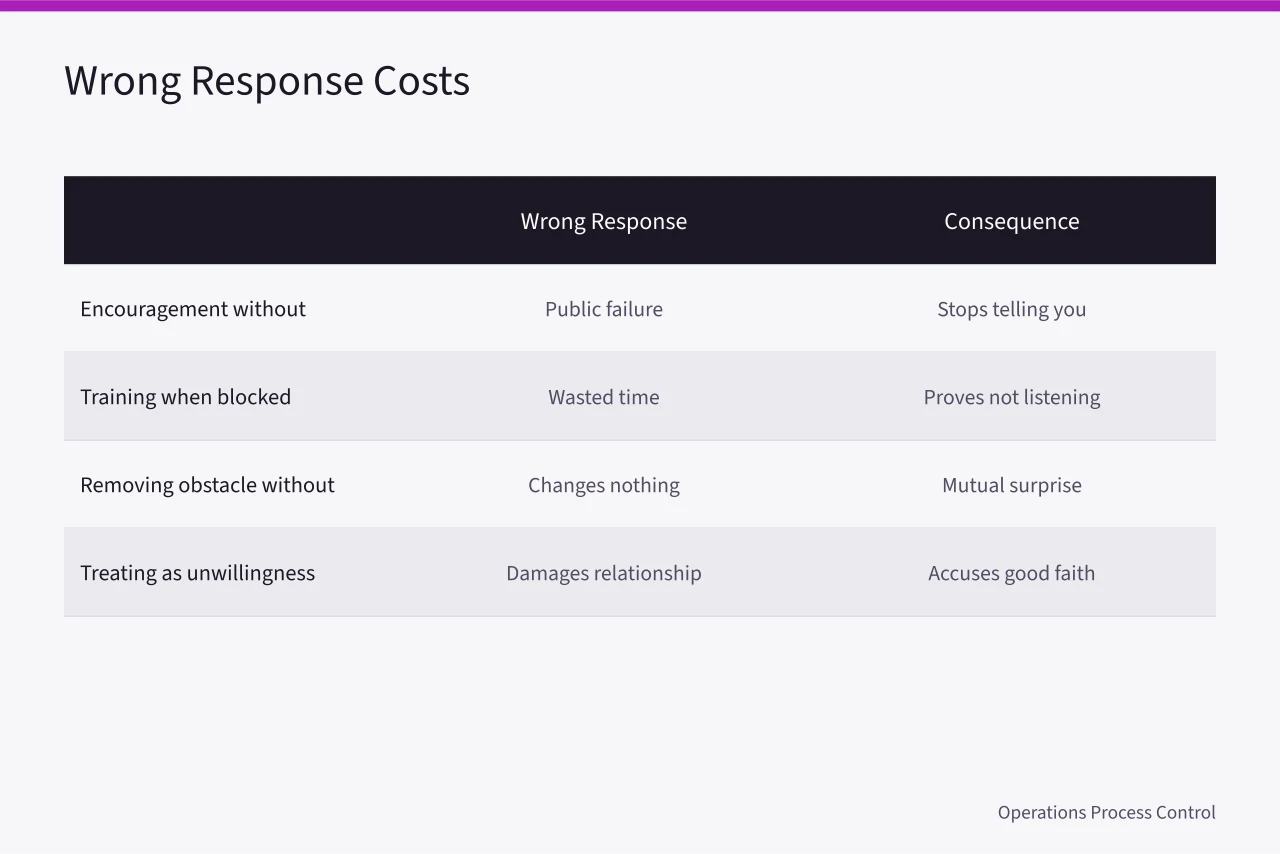
Encouragement without skill lets someone fail publicly while being cheered, and they stop telling you when things are difficult. Training someone who is blocked wastes their time and proves you were not listening.
Removing an obstacle for someone who does not know what is expected changes nothing, and you will both be surprised.
And treating any of the first four as unwillingness damages the relationship permanently, because you have told a person acting in good faith that you think they were not.
There is a common asymmetry worth knowing about yourself. The causes that implicate the organization are harder to see than the ones that implicate the individual, because the individual is present and the system is not. Assume you are underweighting the first four.
Check whether you are the obstacle
Before you reach the fifth row, three questions about yourself. Answer them honestly and preferably in writing.
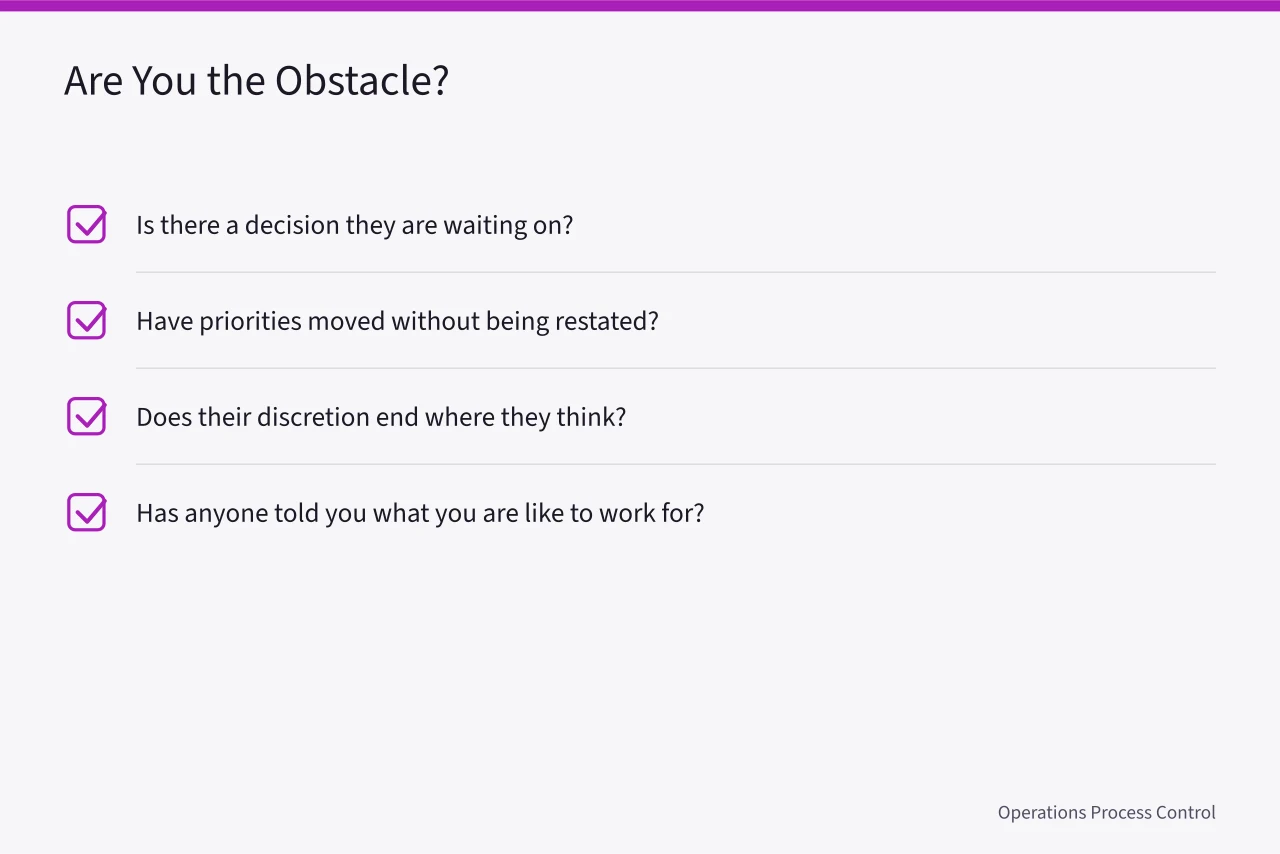
Is there a decision they are waiting on?
Have the priorities moved without being restated?
Does their discretion end where they think it does?
A fourth, less comfortable question: has anybody told you what you are like to work for on this topic? If the last three people in this role had the same difficulty, the common factor is not the people.
When the cause is in the work rather than the person
Some shortfalls are properly operational and the individual is only where they became visible.
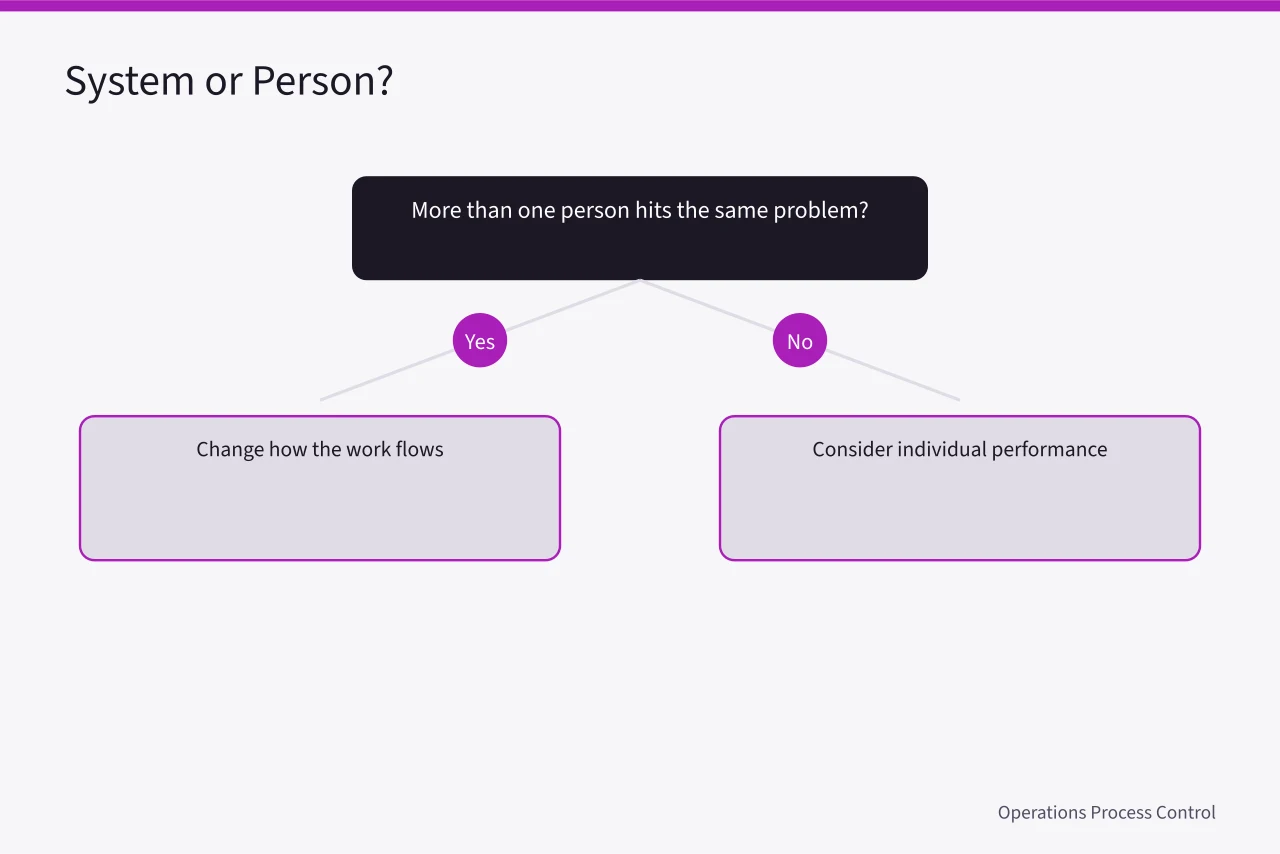
In those cases, the response is a change to how the work flows, not a conversation about performance. Treating it as the latter will produce a compliant person doing an impossible job.
Treating a repeated failure as a property of the system rather than of whoever was holding it is the position taken in the UK Health and Safety Executive's guidance on managing human failure. The diagnostic side of that belongs with operating processes.
Where the role itself has drifted into two jobs, or into a different job, that is a design question and not a performance one. It is one of the errors covered in performance management mistakes, and it is worth ruling out early because the remedy is completely different.
When more than one applies
Usually more than one does. The useful move is not to address them all at once, which produces a conversation that feels like a case being made.
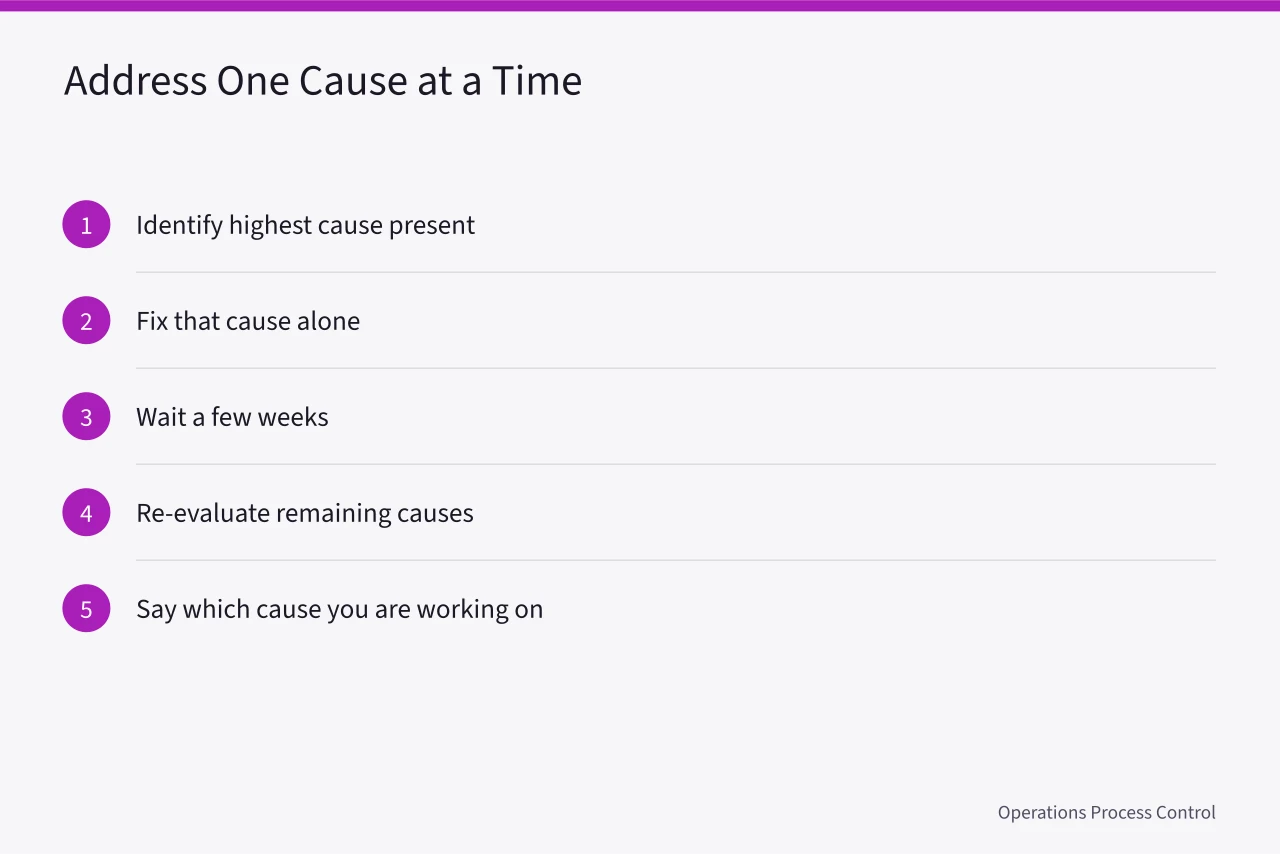
Take the highest one in the table that is actually present and fix that alone. Then look again after a few weeks. A surprising share of the remaining items disappear, because unclear expectations and blocked work generate the appearance of the causes below them.
Say which one you are working on, out loud, to the person. "I think the main thing here is that I have not been clear about what matters most, so let us start there" changes a conversation more than any technique, and it is usually true.
Where this stops
The framework is for diagnosis and for the informal response. It stops at the point where anything with formal consequences comes into view: a performance process, a change to terms, a warning, anything affecting pay or continued employment.
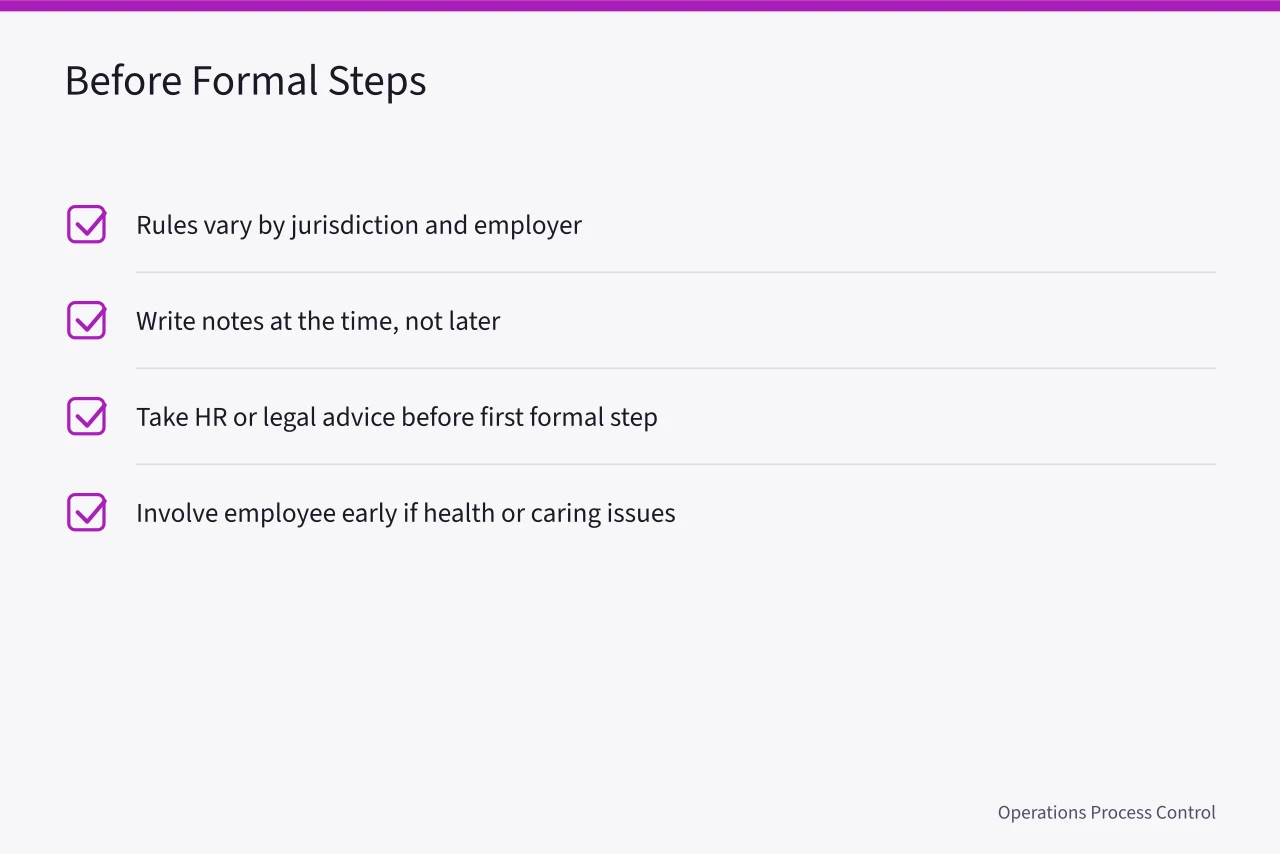
At that line, three things are true no matter where you work. Rules vary by jurisdiction and employer, and a manager who has held informal talks is much better placed than one whose first move is a formal letter.
Your notes must be written at the time, not rebuilt later, so write them from the first conversation onward.
Take advice from HR or your organization's employment counsel before the first formal step. If a sudden change in someone's work may stem from health, caring responsibilities, or something else in their life, involve them earlier. Obligations may apply that you cannot assess.
For a manager new to this, the first-months version is in the management foundations guide.
Common questions
How long should the informal stage last?
Long enough for the agreed change to be possible and short enough that the person is not left in ambiguity. Set a date when you agree the next step, tell them what you will be looking at, and keep it. Open-ended informal periods are unkind, and they are usually a manager postponing rather than a person improving.
What if I diagnose wrongly?
Say so and change the response. The cost of an admitted misdiagnosis is small; the cost of continuing with a response that is not working, because changing it would look inconsistent, is the situation most performance conversations are actually stuck in.
Does this apply to a whole team performing poorly?
The first four causes scale up and the fifth does not. When a group is struggling, the answer is essentially never that several people simultaneously became unwilling. It is expectations, obstacles or conflicting priorities, and those are the manager's to fix.